
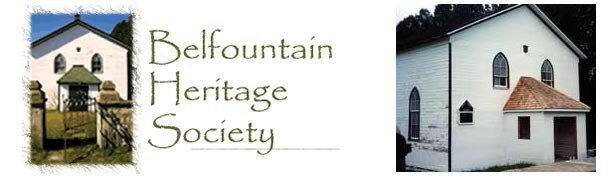
Melville White Church
HISTORY OF MELVILLE WHITE CHURCH
THE PAST
Built in 1837, the Melville White Church is the oldest standing church in the Town of Caledon. It represents the communal efforts of the “Rockside Pioneers”, a group of Presbyterian Scots who settled in the area in the early 1820′s. Organized by Rockside Pioneers John MacDonald and John Crichton, this early congregation first met in MacDonald’s home. By 1828, John Crichton had secured the services of Reverend Andrew Bell, who walked 25 miles once a month to preside over a weekday service. Bell established the congregation of “West Caledon” in 1831; one of its earliest ministers, Duncan McMillan, preached in both Gaelic and English. The original church was a log structure that also served as a school, and was located across the road from the present church.
Built by the Daniel McMillan & Bros. of Erin, the church was painted white upon completion and quickly became known as “the White Church”. The origin of the name “Melville” remains a mystery. In 1843, the Caledon Presbyterian congregation joined others in Upper Canada in separating from the established Church of Scotland and forming the Free Church of Canada. Land for the adjacent cemetery was deeded to the church in 1866.
Some of the names of those early worshippers who enriched the history of the White Church are: Crichton, Gibson, Frank, Pattulo, Burnet, Kirkwood, Foster, Hunter, Mclachlan, MacMillan, McEachern, Campbell and Sharp.
Many of these pioneers came from the Isle off the coast of Scotland.
A small church up the road disbanded in 1990 and, although Congregationalsits, swelled the ranks of the “White Churchers”. Greenlaw Corners no longer exists, but the remnants of their cemetery can still be seen at the corner of Mississauga Road and The Grange Sideroad.
Throughout its history, the White Church has had wonderfully colourful ministers. McMillan often preached in Gaelic. There was an Irishman, a Mulatto (1857) and a blind Syrian (1886). Multiculturalism was alive and well in those days!
The White Church’s congregation ebbed after its centennial in 1937 and the congregation eventually disbanded in 1964. In 1966, the Credit Valley Conservation Authority purchased the church and cemetery property. Most of the church furnishings were sold, although the pulpit was later re-purchased and other artifacts have been returned. Now owned by the Town of Caledon, the church is being restored by the Belfountain Heritage Society for use as a public venue. Thanks to the tremendous efforts of the BHS and strong community support, this important historical landmark has been given a new lease on life!
FEATURES
The Meville White Church is an example of the unadorned style of architecture popular among many Protestant denominations of the early to mid-19th century. Its principal features include:
• hand hewn squared timer framing, clad with hoizontal wood siding
• simple, clean lines with a notable absence of a bell tower or spire
• the arched windows with simple forked Gothic tracery are not original, and likely date to the latter half of the 19th century
• the interior is notable for its horizontal wainscoting and upper loft
• pews salvaged from the former Knox Church, Caledon East
The stone wall with the iron gate was erected across the front of the property in 1901 and 1902; at the same time a system of drains was installed across the cemetery.
The adjacent cemetery is the largest in the immediate area and contains the headstones of many of the Rockside Pioneer families.
THE FUTURE
Architectural technologist Denis Heroux, through the Architectural Conservancy of Ontario, prepared a stimulating and positive report and plan for the restoration of the White Church.
He concluded: “The White Church, one of the few remaining pre-Victorian era timber fame churches in Ontario, is a valuable cultural resource to the Town of Caledon. The modest size of the church, the quality of the natural light filtering through the windows, and the simplicity of the decor made the building highly adaptable for a number of users. It is also fortunate that the church is built mostly of wood making it possible to use local skills and materials.”
The fact that the White Church is a heritage building is not an obstacle to its reuse. The building can be easily modernized while retaining its heritage character.
This report recommended two restoration options – the first for year around use, and the second, only for summertime. This latter option is the plan the Belfountain Heritage Society has undertaken.